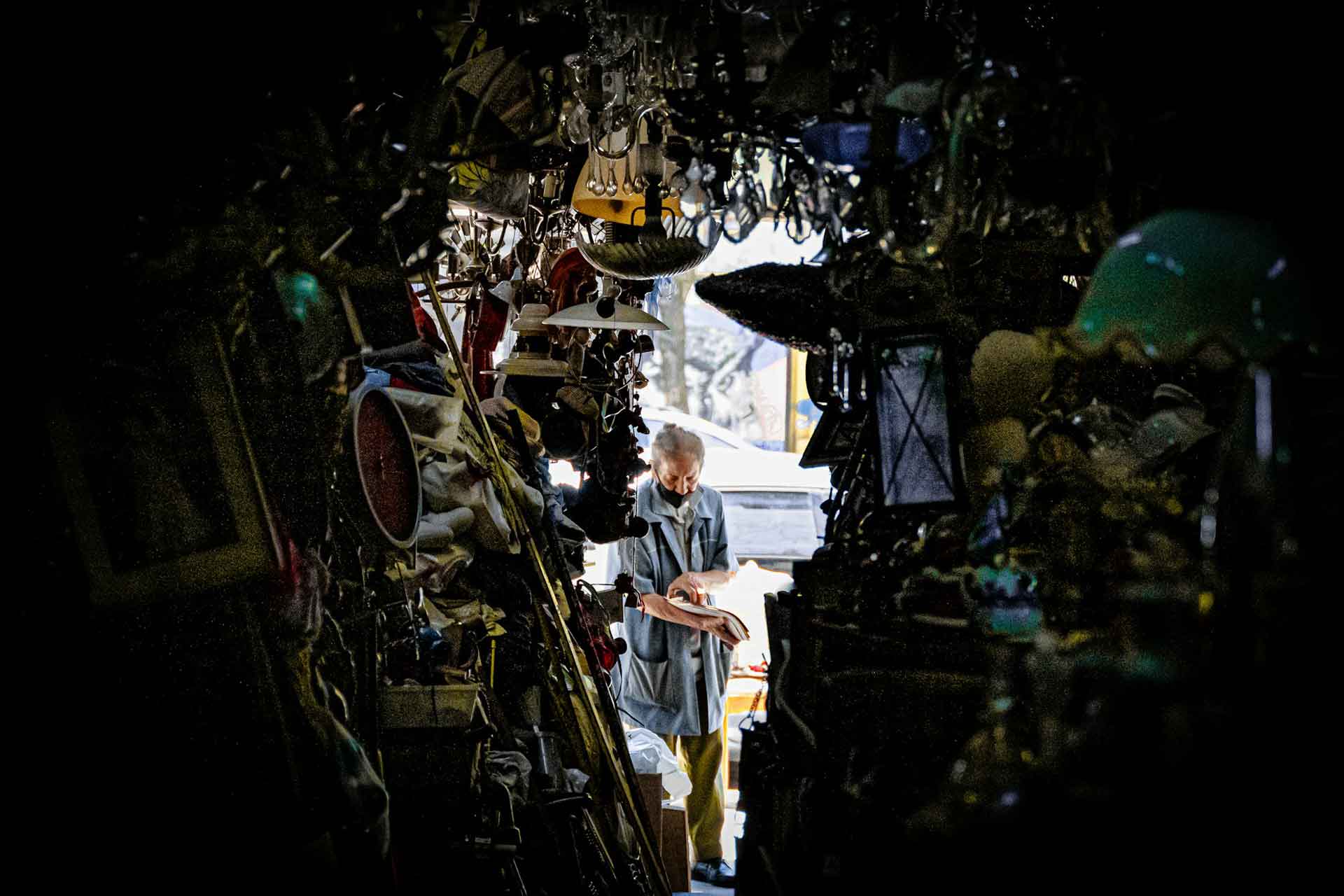

Not every kind of depletion announces itself right away; some just quietly settle in and stay. It builds up slowly in the early mornings and late nights. Lingering in the days that you pushed through, even though your body was screaming for rest.
When you decide to listen to your body, you find that instead of relief, you are faced with feelings of guilt, as if you are falling behind on something. It’s as if you have to earn rest before you are allowed to experience it. This is emotional burnout, and it makes rest feel like a problem rather than a remedy. This feeling has roots that run deeper than a full schedule or a season filled with demands.
In this, Jesus calls us to Himself:
“Come to me, all you who are weary and burdened, and I will give you rest.” – Matthew 11:28, NIV
The Mixed Signals Society Sends About Rest
Today’s culture suggests that rest is something you arrive at only after you have finished everything else. It is the mindset that says you rest once the work is done and the goals are met. It is a message that rings the bell of having to prove you deserve a break.
For those already depleted, this list never ends, which means rest never quite comes. The result is a balancing act where the body is trying to slow down, and the mind is running a constant argument of why stopping is not an option.
The outcome of this internal battle is a low-grade shame that follows anytime there is a moment of stillness. It is a persistent feeling that a person should be doing something more useful than breathing. And underneath all of this is a set of competing values between the belief that productivity equals worth and the belief that stopping means you are somehow less.
For many people, this belief did not begin in adulthood. It was shaped early on in households where rest was earned, where sitting still meant you were not contributing, and where being busy was treated as proof of being responsible. Over time, this conditioning deepens. As responsibilities increase with age, the pattern becomes so familiar that rest feels foreign, and any pause has to be justified before it can be accepted.
God tells us that rest and stillness are important:
He says, “Be still, and know that I am God; I will be exalted among the nations, I will be exalted in the earth.” – Psalm 46:10, NIV
How Emotional Burnout Reshapes the Way You Experience Rest
When the nervous system operates under this prolonged pressure, urgency becomes the normal setting. This makes slowing down feel like a threat rather than a restorative action. Stillness becomes an unfamiliar territory for people experiencing high levels of chronic stress.
 These individuals tend to have increased anxiety as they attempt to rest. Their system has adapted to a high state of alert, and when they step out of that, there is discomfort instead of peace. These individuals are unable to tolerate idleness, which is more common than most of us realize.
Christian counselors recognize that the inability to tolerate idleness is not failure or lack of discipline. It is a physiological and psychological response to the overwhelming busyness of carrying too much for too long. This response is going to require something more intentional than just a weekend away to unwind and refresh.
It calls for a deeper awareness of how the body has learned to associate stillness with danger and how the mind has been trained to equate doing nothing with falling behind. Without addressing this deeper pattern, even the most well-intended attempts at rest will feel incomplete or unsettling rather than restorative.
God’s heart for us is renewal and restoration:
…but those who hope in the LORD will renew their strength. They will soar on wings like eagles; they will run and not grow weary; they will walk and not be faint. – Isaiah 40:31, NIV
The Spiritual Layer of Emotional Burnout
Believers face a challenge with rest that carries a spiritual weight often overlooked. Faith communities celebrate dedication, service, and sacrifice. These values can generate competing demands and make it difficult to separate devotion from depletion. This could lead to a distorted understanding of what faithfulness actually asks.
God does not speak of rest as self-indulgence or a lack of trust. Doing less is not an indication of spiritual irresponsibility. These things are part of being a good steward of the body that God has given us.
When emotional burnout goes unaddressed within this context of faith, there is an added layer of weight in feeling as though they have let God down. Christian counselors emphasize that for those who serve in ministry, caregiving, or other high-demand callings, rest is not an absence of faithfulness. They encourage the understanding that rest is a rhythm that God established in the beginning of creation.
Then, because so many people were coming and going that they did not even have a chance to eat, he said to them, “Come with me by yourselves to a quiet place and get some rest.” – Mark 6:31, NIV
What It Looks Like to Rest Toward Healing
After a prolonged period of depletion, reclaiming rest is not about doing less. To fully rest after this type of weariness requires the individual to unlearn the beliefs that made rest feel unsafe. It is a willingness to examine the idea of value being tied to output or that productivity is proof of faithfulness. Rest in its most genuine form goes beyond sleep and includes emotional safety, relational connection, physical recovery, and spiritual nourishment.
This may look like learning to sit in stillness without immediately reaching for a task. It may involve allowing yourself to say no without feeling the need to explain. It is recognizing that fatigue is not laziness, but the body communicating a real and valid need that has gone unmet for too long. Reclaiming rest means permitting yourself to be present in your own life without the pressure of producing something in return.
Christian counselors are trained to help individuals identify which layers of rest have been missing and how to build rhythms that are sustainable and rooted in theology and grounded in the body and soul. This journey to genuine wholeness does not happen in a single decisive moment. It requires deliberate choices to stop, receive, and trust God in an act of deep faith toward long-lasting healing.
There remains, then, a Sabbath-rest for the people of God; for anyone who enters God’s rest also rests from their own works, just as God did from his. – Hebrews 4:9-10, NIV
Finding Freedom From Emotional Burnout
If rest feels wrong, you’re not alone. It’s not a sign of weakness or evidence of spiritual failure, but rather it is a result of carrying more than you should for longer than your body can sustain. The goal of rest after being depleted for so long is not to feel shame. It is to understand why stopping feels difficult and to find a path back to the rest that restores, instead of merely pausing.
God did not design us to run ourselves into the ground, even in the service of doing good. We were designed to rest after work. It is not a reward for doing something good. Choosing to understand the goodness of rest in God’s plan is a courageous step that leads to long-lasting wholeness.
If you or a loved one is navigating emotional exhaustion and finds it difficult to slow down, reach out to our reception team. They can connect you with the right person to help you navigate the balance between rest and getting everything done.
https://www.verywellmind.com/stress-and-burnout-symptoms-and-causes-3144516
https://www.psychologytoday.com/us/blog/urban-survival/202503/how-to-rest-without-guilt
https://www.psychologytoday.com/us/blog/self-made/202501/burnout-recovery-how-to-recharge-without-guilt
https://psychcentral.com/blog/reducing-your-guilt-about-not-being-productive
https://www.webmd.com/mental-health/burnout-symptoms-signs
https://www.psychologytoday.com/us/basics/burnout
Photo:
“A person in a beige”, Courtesy of Anita Austvika, Unsplash.com, CC0 License
-
 Ashlynn Garrett: Author
I offer compassionate Christian counseling for teens and adult individuals facing a variety of challenges including anxiety, depression, trauma, grief, and more. I would be honored to come alongside you, listen to your story, and seek to understan...
Recent Posts
DISCLAIMER: THIS ARTICLE DOES NOT PROVIDE MEDICAL ADVICE
Articles are intended for informational purposes only and do not constitute medical advice; the content is not intended to be a substitute for professional medical advice, diagnosis, or treatment. All opinions expressed by authors and quoted sources are their own and do not necessarily reflect the opinions of the editors, publishers or editorial boards of Stone Oak Christian Counseling. This website does not recommend or endorse any specific tests, physicians, products, procedures, opinions, or other information that may be mentioned on the Site. Reliance on any information provided by this website is solely at your own risk.